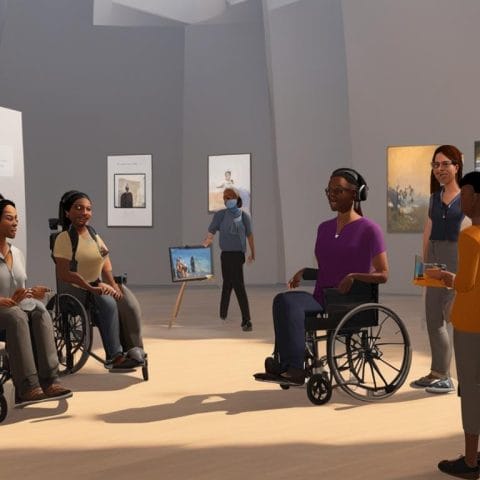
Did you know that learners in immersive environments are 275% more confident in applying new skills than those in traditional settings? This massive leap in effectiveness is exactly why a web-based metaverse classroom for corporate l&d is no longer a futuristic dream. It is a powerful reality that merges physical and digital spheres into one unified platform to drive growth.
You can now combine self-paced modules and live sessions into a single, cohesive learning journey. This innovative approach allows your team to experience the real in a digital world. It effectively bridges the gap between theory and practice. By adopting this technology, you provide immersive experiences that truly stick with your employees.
Forward-thinking organizations use these tools to solve the hurdles of hybrid work. You can explore if this is the next frontier in eLearning. This metaverse technology creates consistent training results. It also fosters a shared culture to support your global learning community.
Key Takeaways
- Bridge the gap between virtual and real learning events seamlessly.
- Boost learner confidence by up to 275% through metaverse interaction.
- Unify physical and digital learning into one accessible platform.
- Reduce costs while providing realistic and safe skill practice.
- Connect global teams through immersive collaborative environments.
- Deliver consistent education to remote and hybrid teams.
Understanding the Metaverse Revolution in Corporate Learning
You are witnessing a historic shift as professional development moves from flat screens into immersive, three-dimensional worlds. This is not just a trend; it is a fundamental evolution of how we share knowledge and corporate learning. By adopting these new spaces, you empower your team to engage with content in ways previously imagined only in fiction.

Defining the Metaverse in Learning Contexts
Neil Stephenson coined the term “metaverse” in his 1992 novel, Snow Crash. He described a virtual space where anyone could meet others in a digital world. Just as cyberspace connects our world, this new realm serves as a hybrid digital paradigm for the modern age.
This space uses digital objects to represent real people, places, and complex situations. It creates a powerful learning experience that feels both authentic and persistent. By utilizing metaverse learning in your education strategy, you turn abstract training into a vivid, tangible reality.
How Metaverse Differs from Traditional Virtual Learning
Traditional virtual training often feels like a flat, lonely experience restricted to a computer monitor. However, a metaverse environment uses virtual reality to foster social presence and embodied cognition. You are no longer just watching a video; you are physically present within the learning space.
This spatial awareness helps the brain retain information much faster than standard e-learning modules. It mimics in-person learning by allowing for natural movement and face-to-face collaboration. You can now bridge the gap between theory and practice within a safe, scalable digital world.
| Feature | Traditional Virtual Learning | Metaverse Learning |
|---|---|---|
| Immersion Level | Low; flat 2D screens | High; 3D spatial environments |
| User Interactivity | Passive clicking and watching | Active movement and manipulation |
| Social Connection | Limited chat and video feeds | Realistic avatars and presence |
| Retention Method | Rote memorization | Embodied cognition and experience |
The Power of Web-Based Metaverse Classroom for Corporate L&D
Step into a new era of talent cultivation where a web-based metaverse classroom for corporate L&D dissolves the barriers of traditional training. This technology isn’t just a new tool; it is a total transformation of how people acquire knowledge. You can now merge physical presence with digital agility to empower your workforce.

Breaking the Limitations of Traditional L&D Approaches
Traditional training methods often struggle to maintain focus because they lack real engagement. Metaverse learning environments adapt to diverse styles and needs instantly. You are no longer restricted by what you can imagine or fit into a simple slide deck.
This platform creates a single, comprehensive ecosystem for all your organizational needs. It allows learning to become a continuous, dynamic process rather than a static event. By removing physical borders, you invite your global team into a unified space for growth.
Creating Immersive Learning Experiences Without Physical Constraints
You can now build training scenarios that were once too dangerous or expensive to attempt in reality. Immersive learning engages multiple senses to build deep emotional connections with the content. This approach dramatically improves how your team understands complex systems.
These learning experiences help your team retain information much faster than reading a manual. Eliminate physical constraints and let your employees explore new paradigms of learning. This freedom leads to higher satisfaction and more creative experiences for every participant.
Bridging the Gap Between Virtual and Real-World Learning
True learning development happens when theory meets practice in a safe, interactive environment. Metaverse classrooms provide contextually relevant spaces that mirror your actual workplace challenges. You can simulate high-stakes situations where employees can fail safely while learning effectively.
This approach helps your staff practice skills in real-time without real-world risks. It truly opens minds to new ideas and ensures that learning sticks for the long term. Your organization becomes more resilient as your people master their roles in a world without boundaries.
Key Benefits of Metaverse Learning for Organizations
You can unlock significant organizational value by integrating immersive technologies into your daily workflows. This shift goes beyond simple novelty by empowering your workforce to master new skills with unprecedented speed. Using these tools ensures your team stays ahead in a competitive global market.

Enhanced Engagement and Knowledge Retention
Traditional methods often struggle to keep people interested during long sessions. However, metaverse learning environments drive unprecedented levels of focus. Research indicates that people are four times more focused in immersive settings compared to standard classrooms.
According to the NTL Institute, learners are 75 percent more likely to retain the information presented to them when learning by doing.
This hands-on experience allows everyone to practice their skills in an applied manner. When you provide a high-quality learners experience, you ensure that knowledge sticks long after the session ends. Active learning transforms passive observers into confident experts.
Cost-Effectiveness and Scalability
Virtual solutions help you eliminate massive travel expenses and facility rental costs. You can easily scale your training to reach thousands of employees across the globe simultaneously. This web-based approach allows for unlimited practice without spending extra on physical resources.
- Reduce facility and logistics costs by hosting sessions in a persistent digital space.
- Scale learning programs instantly to accommodate global growth without sacrificing quality.
- Provide consistent instruction to every team member regardless of their physical location.
Safe Environment for High-Stakes Training
You can now create safe spaces for high-stakes scenarios where mistakes have no real-world consequences. This allows learners to practice dangerous or critical procedures until they reach total mastery. Confidence grows when people can fail and retry without risk.
By focusing on interactive learning, your organization builds a culture of safety. You empower your staff to handle complex challenges with ease. This innovative approach ensures that your most valuable assets—your people—are always prepared for any situation.
Three Essential Applications of Metaverse Learning
You can unlock incredible potential by applying immersive technology to your specific business needs. The versatility of these digital spaces ensures that every department finds value in your learning strategy.

By moving beyond traditional methods, you create a dynamic ecosystem where professional growth is continuous and engaging. These virtual spaces allow you to transform theoretical knowledge into practical expertise immediately.
Hard Skills Training in Virtual Environments
In high-stakes virtual environments, effective learning by doing is the only way to ensure safety and mastery. You can now train employees on heavy machinery or complex chemical reactions without any physical risk to your staff. These realistic simulations allow for repeated practice of technical tasks, such as operating a crane, until the worker is ready.
Employees gain confidence in these virtual scenarios before they ever touch expensive equipment or handle hazardous materials. This approach reduces maintenance costs and eliminates the danger of training accidents. You provide a safe space for failure, which is the most efficient way to build technical competence and operational excellence.
Soft Skills Development Through Immersive Interactions
While videos teach theory, mastering soft skills requires real human-like interaction to truly stick. You can use metaverse learning to practice difficult conversations with AI-powered avatars that respond to your tone. These digital characters react to your body language and facial expressions in real-time, providing a safe space for growth.
This immersive approach prepares your team for crucial topics like allyship and representation through actual practice. Because you can repeat these interactions, your leaders develop the valuable soft skills needed to support the learning journey of their own diverse teams. This transforms how your organization handles conflict, leadership, and emotional intelligence.
Collaborative Meetings and Global Events
The applications of this technology extend far beyond individual training modules. You can host collaborative meetings and massive global events that bring your entire workforce together regardless of their physical location. Physical distance no longer limits how your team interacts or collaborates on high-priority projects.
These applications foster a sense of belonging and community that traditional video calls simply cannot replicate. Teams can brainstorm in 3D spaces and build an immersive learning culture. By utilizing metaverse learning for events, you create memorable experiences that drive long-term engagement and organizational success across the globe.
Implementing Metaverse Learning in Your Corporate L&D Strategy
You can unlock the full potential of immersive training by carefully mapping out your adoption strategy from the ground up. This evolution resembles the rise of e-learning, which enhanced rather than replaced the traditional classroom. Today, you are simply adding a powerful new dimension to your existing toolkit.
VR is generally not going to replace what currently exists. VR is simply enhancing what we already have.
Just as web-based modules didn’t eliminate face-to-face instruction, immersive worlds provide a specialized space for complex skills. You can balance these methods to create a dynamic and modern educational culture. This approach ensures your team stays ahead in an ever-changing professional landscape.
Assessing Organizational Readiness and Needs
Start by identifying the specific L&D challenges your organization currently faces. Evaluate your current infrastructure to see where metaverse learning fits best within your workflow. This initial audit helps you define clear goals and sets the stage for meaningful transformation.

A phased implementation allows you to start with small pilot programs. You can measure early results and showcase wins to build confidence across the board. Scaling successful initiatives becomes much easier once you have proven the value of immersion.
Technology Requirements and Considerations
Modern technology makes web-based classrooms highly accessible through standard internet browsers. You should consider hardware needs, software platforms, and reliable connectivity to ensure a seamless user experience. This focus on accessibility removes barriers and empowers every employee to participate.
Choosing a no-code solution ensures that your development team can build realities without complex programming. This flexibility allows for rapid updates and creative freedom. High-quality visuals and intuitive interfaces are essential for maintaining deep user engagement during training sessions.
Integration with Existing Learning Ecosystems
Your new tools must work in harmony with your current Learning Management Systems. Focus on demonstrating a clear ROI to gain support from business leaders and key stakeholders. A cohesive learning ecosystem creates a unified path for professional learning growth and learning excellence.
You can address adoption concerns by highlighting the safety and efficiency of virtual environments. Encourage feedback from users to refine the learning experience over time. By blending these innovative spaces with your existing programs, you create a future-ready workforce.
Real-World Examples of Successful Metaverse Learning
Moving beyond theory, let’s explore how leading organizations achieve tangible results through spatial computing. You can see the future of metaverse learning in action through these powerful success stories that transform traditional corporate education.
Case Study: Global Onboarding Programs
Imagine a hybrid organization with distributed teams across the world. New hires log in to a virtual campus and create personalized avatars to start their professional journey.
They follow a daily schedule filled with immersive experience modules that mirror in-person inductions. These new employees interact with peers in real-time within a digital twin of the actual office and its various sections.
This approach creates a deep sense of belonging and culture from day one. It bridges the gap between remote workers and the central hub without requiring expensive travel.
Case Study: Technical Skills Training
In technical industries, safety is the top priority for every worker. Companies are now implementing immersive training for complex equipment operation and maintenance procedures.
These virtual environments allow technicians to practice high-stakes tasks without any physical risk or equipment downtime. This hands-on learning approach leads to dramatic improvements in proficiency and a significant reduction in workplace incidents.
By mastering skills in a digital space, teams feel more confident when they step onto the factory floor. The data shows that this learning method cuts the time needed to reach full competency by nearly half.
Case Study: Leadership Development
Leadership development thrives when managers can practice real-world scenarios. Many organizations use metaverse in corporate learning to simulate difficult conversations and team management challenges.
Leaders engage in realistic simulations where they must make quick decisions under pressure. This specific training type provides immediate feedback and measurable performance metrics to help them grow.
It turns theoretical learning into a practical tool for building stronger, more empathetic executive teams. These simulations ensure that the first time a leader handles a crisis, it isn’t in a live, high-risk learning environment.
| Program Type | Key Focus | Measurable Outcome |
|---|---|---|
| Global Onboarding | Cultural Integration | Increased new hire retention |
| Technical Training | Equipment Mastery | 75% reduction in safety incidents |
| Leadership Development | Soft Skills & Empathy | Improved decision-making speed |
Overcoming Challenges in Metaverse Learning Adoption
While moving to immersive spaces might seem daunting, you can navigate implementation hurdles easily. Every innovation requires a change in mindset to unlock your organization’s true potential.
Addressing Cost and ROI Concerns
Many leaders worry about the initial price tag for learning tech. While high-end VR costs more than traditional training, you should view it as a strategic enhancement. You are not replacing old methods, but scaling value through long-term economics.
Interestingly, headsets and digital devices are very accessible today. Many of your employees likely use the same gear their teenagers use for fun at home. This familiarity reduces the need for expensive new hardware and speeds up your rollout.
Managing Technical Barriers and User Adoption
You can manage technical barriers by choosing tools that fit your current budget and tech stack. Addressing user resistance starts with an intuitive interface and a smooth onboarding process. You must create compelling learning experiences that motivate your team to jump in.
By providing clear guidance and support, you allow learners to feel confident while exploring new digital realms. This approach builds a strong bridge between initial hesitation and total mastery. Your team will soon view these tools as essential parts of their daily growth.
Designing Effective Learning Experiences
Effective learning design balances flashy tech with sound instructional principles. You should focus on learners and their specific needs rather than just the visual spectacle. Use learning environments that turn complex data into actionable skills for everyone.
Measure your success with clear metrics that show stakeholders exactly how these experiences drive performance. Continuous improvement relies on tracking how people interact with the content. High-quality learning initiatives prove their worth through improved employee retention and faster skill gain.
| Adoption Challenge | Strategic Solution | Expected Outcome |
|---|---|---|
| High Upfront Costs | Utilize accessible hardware and focus on long-term scalability. | Reduced travel expenses and higher training efficiency. |
| User Resistance | Implement intuitive interfaces and gamified onboarding steps. | Higher engagement rates and faster technology mastery. |
| Technical Complexity | Choose no-code, web-based platforms for easier access. | Lower IT burden and seamless cross-device participation. |
The Future of Metaverse Learning in Corporate L&D
A new era of digital transformation is dawning, where boundaries between physical and virtual workspaces vanish. Currently, many organizations take a “wait, watch, and learn” approach to these immersive platforms. This careful strategy allows leaders to observe the initial successes of early adopters before committing fully.
Trailblazers are already moving beyond simple curiosity. For instance, some forward-thinking business schools have launched 100% digital campuses to engage global learners. These pioneers demonstrate that high-quality education is no longer confined to brick-and-mortar buildings.
As collaboration tools like Facebook’s Oculus and Horizon Workrooms mature, the technology will shift into the mainstream. Metaverse learning will soon become the standard for companies seeking to unite a remote workforce. You can expect a period of trial and error as organizations refine these virtual experiences.
Over the next few years, these digital environments will become increasingly sophisticated and accessible. The transfer of learning will occur in persistent spaces that feel as natural as a physical office. This shift empowers your team to master complex skills in a safe, shared digital reality.
| Future Trend | Business Impact | Timeline |
|---|---|---|
| Haptic Integration | Increased muscle memory and realism | 2-3 Years |
| AI Personalization | Dynamic training based on performance | 1-2 Years |
| Blockchain IDs | Instant, secure skill certification | 2-4 Years |
Emerging Trends and Technologies
The metaverse is evolving through breakthroughs in sensory feedback and artificial intelligence. New haptic tools allow learners to feel physical sensations while practicing technical tasks in a digital space. These interactions make abstract concepts tangible and improve knowledge retention across the board.
AI is also transforming metaverse learning by creating environments that adapt in real-time to each user. Smart avatars can now act as personalized coaches, offering feedback exactly when it is needed most. This level of customization ensures that no employee is left behind during the training process.
Additionally, blockchain technology is set to revolutionize how we verify professional achievements within the metaverse. Digital credentials will provide a tamper-proof record of an individual’s skills and certifications. This secure ecosystem builds trust and transparency for organizations and employees alike.
Preparing Your Organization for the Next Wave
You must build flexible frameworks today to incorporate the learning tools of tomorrow. Focus on creating an agile L&D strategy that can adapt as immersive hardware and software continue to improve. A modular approach ensures your organization stays ahead of the curve without needing a total system overhaul.
Forward-thinking companies are already launching pilot programs to build deep internal expertise. These small-scale tests allow you to discover how a hands-on learning experience impacts your specific team’s performance. By experimenting now, you identify potential challenges and refine your approach before a full-scale rollout.
The transition to immersive training is not just a technological upgrade; it is a cultural revolution.
Transformation starts with a single step toward innovation. Success in the next era of learning depends on your willingness to embrace these bold new tools today. Empower your team to build new realities and unlock their full potential through persistent virtual connection.
Hyperspace: The Ideal Web-Based Metaverse Solution for Corporate L&D
Step into the future of corporate development with Hyperspace, the premier no-code metaverse solution. This web-based platform empowers you to deliver high-impact learning that fits your budget. You can easily allow learners experience immersive training without any specialized hardware.
Build a vibrant virtual world using our intuitive, no-code tools. These learning experiences give your learners the freedom to practice in safe environments. By choosing Hyperspace, you ensure your training is both scalable and effective for every employee path.
- Empower your team with an intuitive, web-based platform specifically designed to solve unique corporate hurdles.
- Create custom learning experiences quickly using a robust suite of tools that require zero technical expertise.
- Integrate with your current LMS to allow learners experience a smooth transition into the immersive metaverse.
- Track performance and learning outcomes with advanced analytics that provide deep insights into skill development.
Leading companies trust Hyperspace to provide training that prepares learners for the real world. Empower your workforce and transform your culture today. Experience the future of learning for your learners by starting a hyperspace trial signup to see the results for yourself.
Conclusion
Adopting a metaverse learning approach unlocks unprecedented potential for every member of your team.
This technology changes how people gain knowledge in the modern workplace.
By using simulations, employees practice soft skills and technical concepts in a safe environment.
Your organization can see a massive impact on retention when learners engage with high-quality learning experiences.
This way of education bridges the gap between the virtual world and real life situations.
Every learner deserves a program that respects their time and enhances their development.
You can use these applications to improve collaboration on any project.
Whether through scenarios or a complex application, people learn faster in immersive environments.
Each learners experience provides a unique example of how reality meets digital simulations.
It is time to move beyond traditional training to a better way of learning.
Your business will benefit as people apply what they learn in the metaverse to real world situations.
High-stakes training becomes safer in a virtual environment.
You can use reality to create a better life for your people through education.
Every time learners use this way, they gain better experience.
This article helps you find an example of how to use soft skills in the workplace.
Spend time in digital environments to see how people improve their development.
Use metaverse learning to build a better project for your business.
This application gives students the experience they need for the world.
Start your metaverse learning journey today to see the potential for your students and people.
Experience the impact of this application in your own organization right now.
Experience the future firsthand by visiting http://hyperspace.mv/get-starter to begin your free trial with Hyperspace.
This article shows how metaverse learning creates better learning for all people.
Every time learners enter these environments, they gain valuable experience.
Use this article to find a new example of reality through metaverse learning.