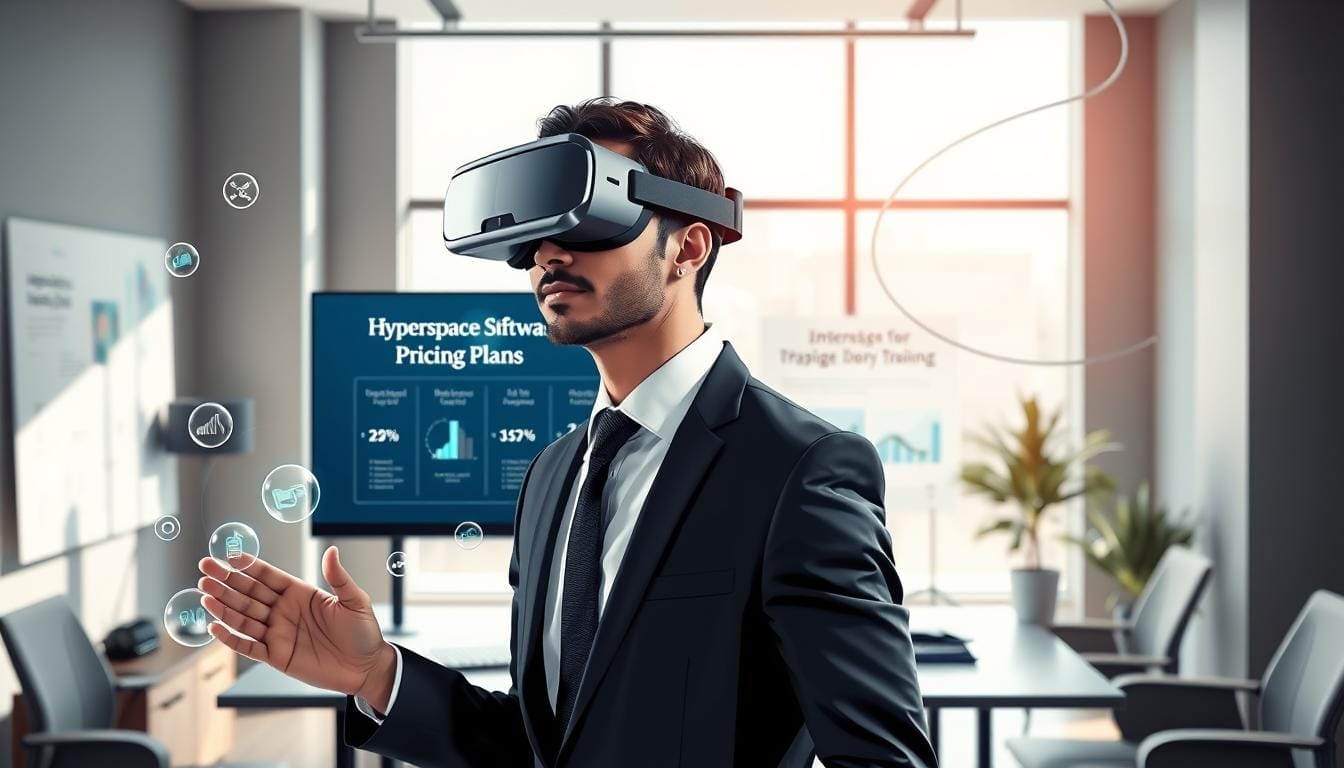
You are ready to transform your workforce using cutting-edge virtual reality training. Many leaders start with a pilot program to test this new virtual reality. Typically, a pilot project cost ranges from $40,000 to $60,000 to launch successfully.
Moving toward a full-scale immersive experience requires a larger commitment. You can expect an average investment between $50,000 and $150,000 for custom content design. This ensures your team gains the high-level skills needed for modern business challenges.
Understanding the total cost involves looking at hardware and license requirements. This innovative approach simplifies how you grow your people. Unlock the future of learning and empower your users today.
Key Takeaways
- A pilot program for immersive learning usually costs between $40,000 and $60,000.
- Full implementation for your organization typically ranges from $50,000 to $150,000.
- Expenses depend on factors like hardware, custom development, and license fees.
- Transitioning from a pilot to full design ensures a scalable learning journey.
- High-quality immersive tools provide a significant return on your initial outlay.
- Modern solutions simplify complex skill acquisition through interactive environments.
Understanding the Value of VR Training Software

You can transform how your team grows by embracing the power of immersive technology. Using virtual reality allows you to bridge the gap between abstract theory and hands-on practice. It’s a bold step toward driving real results for your business.
Before you invest, understanding essential VR training characteristics helps you identify the best ROI. You deserve tools that do more than just simulate; you need tools that empower. This technology turns passive observers into active participants.
What Makes VR Training Different
Why does this new reality feel so impactful for your workforce? In gathering metrics from immersive experiences, experts have found that people simply prefer this method. They absorb more information and retain it for much longer periods.
This isn’t just a hunch; the effectiveness of this training is entirely measurable. You can track every movement and decision to refine your learning strategy instantly. It creates a feedback loop that traditional methods cannot replicate.
Key Benefits of VR Training Solutions
Implementing modern training programs allows you to grow at scale without losing quality. You can sharpen employee skills in safe environments that mimic the real world perfectly. This approach removes the risks of traditional on-site drills.
- Training completion is often 40% faster than traditional methods, saving your team valuable time.
- Organizations report up to 80% better knowledge retention through immersive repetition and active engagement.
- The technology provides detailed analytics on learner performance for data-driven improvements to your curriculum.
- Solutions scale efficiently across multiple global locations, ensuring consistent training quality everywhere.
- Businesses see substantial cost savings by reducing the need for physical facilities, travel, and instructor time.
You are not just buying software; you are building a future-proof workforce. The ability to practice high-stakes scenarios without real-world consequences is a game-changer. This is how you lead your industry through innovation.
The Real Cost of VR Training Software
Transforming your corporate education through innovation comes with specific budgetary requirements you need to know. Understanding these expenses allows you to plan a sustainable roadmap for growth. You are not just buying software; you are building a new reality for your employees.
A clear budget helps you move from traditional methods to immersive experiences without financial surprises. By identifying the core needs of your team, you can allocate resources effectively. This approach ensures your technological evolution remains both powerful and profitable.
Average Price Ranges for VR Training Solutions
Investing in a virtual reality solution is a strategic move that varies based on complexity. Most organizations find that entry-level projects begin around $40,000. This often covers the development of a few core modules designed for specific tasks.

High-end enterprise solutions can exceed $150,000 for a single project. These premium plans include deep customization and advanced analytics for large teams. You should choose a tier that aligns with your specific business goals and technical needs.
Pilot Programs vs. Full Implementation Costs
A pilot program is a great way to get started with immersive technology. You can learn about the process of developing your content in a controlled environment. This phase lets you test to see if the technology is received well by your learners.
Typically, a pilot costs between $40,000 and $60,000. It focuses on 1-3 modules to prove the training program works for your staff. You can figure out if your learning objectives can be met effectively before expanding.
| Implementation Phase | Estimated Cost | Key Focus Area |
|---|---|---|
| Pilot Program | $40,000 – $60,000 | Validation and Feedback |
| Full Scale | $50,000 – $150,000+ | Enterprise Integration |
Full implementation covers hardware fleet management and integration with existing systems. It ensures your training solution can scale for your business needs globally. Proper costs management during this transition is vital for long-term success.
Most pilots last 3 to 6 months before moving to a larger rollout. This timeframe gives you enough space for user feedback and performance assessment. Your training results will justify the expanded reach across the organization. Continuous training updates keep the experience fresh and impactful. Effective training strategies always prioritize long-term value over initial setup speed.
Breaking Down VR Training Software Pricing Factors

Transforming your corporate education strategy starts with a clear view of the diverse variables affecting your bottom line. You must understand that pricing is rarely a one-size-fits-all figure. Instead, it reflects a blend of creative assets and technical infrastructure.
By evaluating these factors early, you ensure that your investment scales efficiently while delivering maximum impact. This strategic clarity ensures your training program succeeds from day one.
Content Development and Customization Costs
The complexity of your virtual modules significantly dictates the final investment. If you choose off-the-shelf modules, you save money but lose specific brand relevance. Custom builds allow you to recreate your exact workspace for better realism.
You should review this guide to VR training costs to see how customization levels shift the budget. High-fidelity environments require more labor-intensive 3D modeling and scenario design. These decisions directly affect the long-term effectiveness of your training scenarios and learner engagement.
Hardware Requirements and Associated Expenses
While our primary focus is on the virtual experience, you cannot ignore the physical gear that powers it. Your choice between standalone headsets and PC-VR units changes the infrastructure costs significantly. Standalone units offer mobility, while tethered systems provide higher graphical fidelity.
You also need to account for accessories like charging stations and sanitary kits. Managing a high-performance system ensures a consistent experience for every user. This hardware foundation supports every immersive training session you deliver to your workforce.
Software Licensing and Platform Fees
Most enterprise solutions rely on a recurring model to keep the software updated and secure. Your price depends on the specific number of licenses or the active headsets on the system. You can expect to pay between $10 – $20 monthly per license plus a baseline fee for an XRS portal.
Keep in mind that with an XRS, the economies of scale mean that the more headsets you have, the less you pay per unit. This model ensures you have access to technical support and the latest feature updates. It is the most sustainable way to manage modern training solutions at scale.
- VR training platforms typically charge $10-$30 per user per month for software licensing, with volume discounts available for larger deployments.
- Most enterprise VR solutions require an Extended Reality System (XRS) to manage content and analytics, adding $500-$2,000 monthly for the base platform.
- Costs often include content hosting, user management, analytics dashboards, and basic technical assistance.
- Annual licensing agreements typically offer 10-20% savings compared to month-to-month arrangements, making them more cost-effective for long-term use.
- Premium support packages with dedicated account managers can add $1,000-$5,000 annually to your total investment.
VR Training Software Pricing Models Explained
Selecting the right payment structure for your immersive education program can transform your company’s bottom line. You must choose a plan that supports your current needs while allowing you to scale your operations effortlessly. Modern vendors offer several paths to help you unlock the potential of your workforce.
One-Time Purchase vs. Subscription Models
Most forward-thinking companies now choose subscription-based virtual reality platforms to maintain agility. When you use a management system like an XRS, you typically pay for one license per headset. You can expect to pay between $20 and $30 monthly per license, though some providers charge a baseline portal fee.
Software subscriptions offer a unique advantage because they align with your growth. Keep in mind that economies of scale play a huge role in your total costs. The more headsets you bring onto the system, the less you generally pay for each individual unit.
Subscription models ensure your training content remains updated and compatible with the latest hardware releases.

While one-time purchases were common in the past, they often lack the long-term support required for high-tech tools. Subscriptions allow you to treat your software as an operational expense rather than a massive capital hit. This flexibility helps you stay at the cutting edge of innovation without constant reinvestment.
Per-User vs. Enterprise Licensing Options
The reality of modern software is that your licensing choice depends on your specific head count. Per-user licensing models usually charge based on the number of individual learners, often ranging from $20 to $50 monthly. These plans are ideal if you have clearly defined groups that need specific access.
For a larger organization, enterprise licensing provides a much more robust solution. These plans typically offer a flat fee between $5,000 and $25,000 monthly for unlimited access. This model empowers you to train a fluctuating number of employees without worrying about seat limits.
Enterprise plans also include premium features like priority support and custom branding. You can gain access to advanced training analytics that help you measure the exact impact of your programs. Larger teams find these plans more cost-effective as they expand their reach across different departments.
| Feature | Per-User Model | Enterprise Model | Benefit Focus |
|---|---|---|---|
| Monthly Cost | $20 – $50 per user | $5,000 – $25,000 flat | Budget Control |
| User Limit | Fixed per license | Unlimited access | Flexibility |
| Best For | Small teams/projects | Large corporations | Scalability |
| Support Tier | Standard assistance | Priority & 24/7 | Reliability |
Cost Comparison: VR Training vs. Traditional Training Methods
When you weigh virtual methods against classroom sessions, the financial picture shifts dramatically. There is a whole ecosystem of expertise involved in creating and measuring immersive programs. While this brings a specific upfront cost, you pay off the investment quickly because the training itself proves more effective.
Initial Investment Differences
Traditional methods often seem cheaper at first because you only see the room rental or instructor fee. However, these expenses grow linearly with every new employee you hire. You must pay for travel, materials, and lost productivity every single time you host a session.
In contrast, virtual reality requires a higher initial spend to build the digital environment and hardware setup. You invest in custom content development and platform licensing early in the process. This creates a powerful foundation that supports your business as you scale your operations.
Once the digital world exists, your expense per user drops significantly. You no longer need to book venues or fly experts across the country. This training approach allows you to train thousands of people using the same original assets.
Long-Term ROI Comparison
You will typically see a full return on your investment within 12 to 24 months. Data proves that immersive learning reduces training time by 40-60% compared to traditional classrooms. Employees stay engaged and remember 75-90% of what they practice in a digital reality.
These gains lead to fewer safety incidents and improved performance metrics across the board. Organizations report 28-40% fewer accidents when teams practice in a safe, simulated environment. Your time is valuable, and VR ensures you do not waste it on repetitive, low-impact lectures.
Traditional ROI calculations often miss the value of faster skill acquisition and improved compliance. By reducing human error and boosting confidence, you build a more resilient workforce. This training model transforms your budget from a recurring expense into a long-term asset.
| Metric | Traditional Methods | VR Solutions |
|---|---|---|
| Scaling Cost | Increases per user | Decreases per user |
| Knowledge Retention | 10% – 20% | 75% – 90% |
| Completion Speed | Standard pace | 40% – 60% Faster |
| Safety Incidents | Baseline rates | 28% – 40% Reduction |
Budgeting for VR Training Implementation

When you prepare a budget for immersive education, you are not just buying software; you are investing in the future of human potential. A successful virtual reality rollout begins with a smart, phased approach that demonstrates value through high-impact results.
Essential vs. Optional Components
Smart leaders prioritize a foundational environment that typically costs between $20,000 and $40,000. This digital space allows your organization to repurpose assets across many different scenarios without starting from scratch each time.
Once this base is ready, you can add specific training modules for $5,000 to $15,000 each. This modular approach keeps your initial costs manageable while providing a clear path for deep, immersive experiences.
Reality shows that distinguishing between “must-haves” and “nice-to-haves” prevents early overspending. Focusing on core functionality ensures your workers get the most value immediately while you gather data for future expansion.
Scaling Your VR Training Investment
To scale your investment effectively, start by using shared devices at central locations. This strategy reduces the hardware burden before you transition to dedicated headsets at every site. It also allows you to test user acceptance in a controlled environment.
A successful expansion requires a cross-functional team involving L&D, IT, and operations. These experts work together to ensure your training plan aligns with both technical infrastructure and long-term business goals.
We build pilots as though they are part of a full training program. This creates a usable starting point so you can grow your content library incrementally based on proven ROI. Every new training module you add strengthens the overall system and increases workforce proficiency.
Hidden Costs to Consider When Purchasing VR Training Software
While the transformation potential of VR is limitless, you must account for the subtle financial commitments that sustain success. Launching a virtual reality program is an exciting leap into the future of training. You can effectively send your “best trainer” to every location at once through virtual experiences.
The number of people who can benefit from your expertise is only limited by your headset inventory. When you share headsets in a staggered way, your impact grows even further. You are not just buying software; you are building a scalable engine for excellence.
“Virtual reality enables us to scale human expertise at the speed of light, bringing the world’s best instruction to anyone, anywhere.”
Maintenance and Support Expenses
To keep your team operating at peak performance, you must maintain the underlying infrastructure. This includes regular hardware maintenance and software subscription updates to prevent technical glitches. Reliable support ensures that your sessions run smoothly without frustrating interruptions.
You should also consider the cost of sanitization supplies and protective gear for your headsets. These minor expenses protect your larger investment over several years. Consistent technical upkeep guarantees a seamless transition into the metaverse for every participant.
Content Updates and Refreshes
Innovation never stands still, and your learning content should reflect that reality. As your business processes evolve, your virtual environments will require periodic refreshes to remain accurate. These updates ensure that your simulations always match your current real-world safety standards and protocols.
Budgeting for these changes prevents your curriculum from becoming stale or obsolete. You can work with developers to create modular content that is easier and cheaper to update. Staying modern is the key to maintaining high engagement across your organization.
Training for Trainers and Administrators
Empowering your employees requires a dedicated investment in your instructional staff. Onboarding a new user typically takes 30 to 60 minutes of dedicated time to ensure they feel comfortable with the technology. You must also budget for time to train one or two administrators per location.
Preparing internal staff to manage these systems usually requires 2 to 5 days of instruction. These sessions often cost between $2,000 and $5,000 per session. Additionally, train-the-trainer programs ensure your staff can integrate immersive components with your broader goals.
Remember that turnover can create ongoing needs for more sessions. Experts recommend budgeting 10% to 15% of your initial training costs annually for new staff. This keeps your internal knowledge base strong even as your workforce shifts and grows.
| Cost Component | Estimated Investment | Time Commitment |
|---|---|---|
| Admin training | $2,000 – $5,000 | 2 – 5 Days |
| Train-the-Trainer | $1,500 – $3,000 | Per Person |
| Employee Onboarding | Internal Labor | 30 – 60 Minutes |
| Admin Turnover | 15% of Initial Cost | Annual Refresh |
How to Maximize Your VR Training Software Investment
You can unlock the full potential of your virtual reality assets by following a strategic approach to deployment. Transformation happens when you treat innovation as an ongoing journey rather than a one-time event. By focusing on both people and processes, you ensure your training software delivers consistent value across your entire organization.
Best Practices for Implementation
To ensure a seamless user experience, you should introduce the technology through a phased rollout. This allows your team to get comfortable with the virtual environment without feeling the pressure of a sudden change. Empowering your workforce with clear communication is the first step toward building confidence in these new tools.
High-performing organizations always gather qualitative feedback through surveys to identify hidden opportunities in the learning path. You should establish regular review cycles every few months to evaluate your content’s relevance. These check-ins allow you to make quick adjustments to your delivery methods based on actual feedback.
Focus on creating a supportive atmosphere where every employee feels invited to explore. When you empower your managers to lead the transition, the digital evolution becomes a shared success. This proactive engagement ensures that your initial investment continues to grow as your needs change.
Measuring Training Effectiveness and ROI
The effectiveness of immersive technology is entirely measurable through objective data. You should implement comprehensive measurement frameworks that track both technical scores and real-world business outcomes. By utilizing the rich metrics captured by the headset, you can analyze specific user interactions and areas where workers struggle.
Comparing performance from before and after the training is essential for calculating tangible ROI. This evidence proves the value of your learning initiative and justifies future expansion. Tracking metrics like error reduction and productivity improvements provides the clarity you need to move forward with confidence.
| Performance Area | Data Point tracked | Business Impact |
|---|---|---|
| Task Accuracy | Error Frequency | Reduced Waste |
| Speed to Proficiency | Completion Time | Faster Onboarding |
| Knowledge Retention | Assessment Scores | Safer Workplace |
“The effectiveness of VR training is entirely measurable. Time and again, in gathering metrics from Immersive Learning customers, Strivr has found that learners simply prefer VR training, and that they learn more from it — and retain it for longer.”
Regularly auditing these results ensures your training strategy stays aligned with your high-level business goals. You have the power to transform raw numbers into a narrative of innovation and success. With the right data in hand, your path to a fully optimized workforce becomes clear and achievable.
Choosing the Right VR Training Software for Your Budget

You can unlock the power of innovation while staying within your financial boundaries by choosing the right partner. Finding the best vr training software for small budget needs means looking beyond the initial sticker price. It is important to remember that based on your vendor, scale, and specific goals, these prices will vary significantly.
Keep in mind that when you are looking to invest in virtual reality training, it is best to work with your vendor to optimize your budget for your program’s learning objectives. This collaboration ensures you focus your spending on the features that truly drive performance. You don’t need every bell and whistle to create a meaningful impact.
Different types of software offer various entry points for growing companies. You might choose a modular approach where you add features as your team expands. This keeps your early investment low while maintaining the reality of a high-quality immersive experience.
By starting small, you can prove the effectiveness of the training to your stakeholders. This data-driven approach builds a strong case for future expansion. It turns a simple pilot program into a long-term strategy for success.
A smart investment focuses on scalability and ease of use. You want a platform that allows you to manage everything without needing a team of developers. This self-sufficiency is the key to maintaining a lean and efficient budget over time.
Questions to Ask VR Training Vendors
You deserve a partner who understands your unique vision for growth. Start by asking how the platform tracks user progress and skill acquisition. Knowing how every user interacts with the environment helps you refine your training material for better results.
Ask about their update schedule and if they charge extra for new features. You should also inquire about hardware compatibility to avoid being locked into expensive, proprietary gear. A transparent vendor will provide a clear roadmap for your digital journey.
Inquire about the level of technical support included in your plan. Training your internal administrators should be a priority for any reputable vendor. You want to ensure your team feels empowered to lead this technological shift with confidence.
Red Flags to Watch For in Pricing Plans
Navigating costs requires a sharp eye for detail. Be wary of vendors who quote significantly below market rates, such as $20,000 for full programs. This often indicates limited functionality or hidden fees that appear later in the project.
Watch for vague pricing structures that don’t clearly delineate expenses for content development and hardware. You need a detailed breakdown to manage your budget effectively. Avoid contracts with punitive terms for scaling down your usage or moving to a different system.
- Question per-user pricing models that don’t offer volume discounts or charge the same rate regardless of usage frequency.
- Be cautious of vendors who can’t provide clear timelines for development or exclude revision cycles from their pricing.
- Avoid proprietary systems that lock you in and limit your future flexibility as technology evolves.
- Verify the scope of support to ensure you aren’t charged extra for basic troubleshooting or training updates.
Why Hyperspace Offers the Best Value in VR Training Solutions
Hyperspace transforms how your organization approaches skill development by providing a clear path to immersive success. We stand apart in the virtual reality training market by offering transparent, all-inclusive pricing models. This bold approach eliminates surprise costs and keeps your business budget on track for long-term growth.
Our team combines deep expertise in instructional design and immersive technology to build better tools. We create a training experience that delivers measurable results through a realistic environment. Unlike competitors who charge for updates, Hyperspace includes quarterly content refreshes to ensure your learning materials stay current.
Our platform integrates seamlessly with existing management systems to simplify your reality training rollout. Clients typically see 30-50% faster skill acquisition and 40% better knowledge retention compared to legacy methods. This efficiency makes virtual reality the most powerful tool for your modern training needs.
Invest in a reality where your staff excels through high-quality training programs every single day. Ready to transform your training approach? Start your free trial today and experience the Hyperspace difference firsthand at http://hyperspace.mv/get-starter.