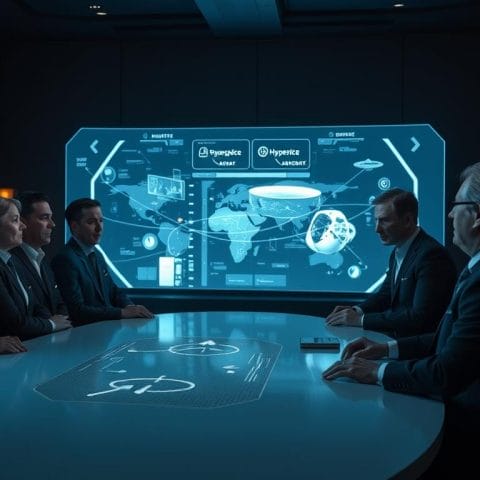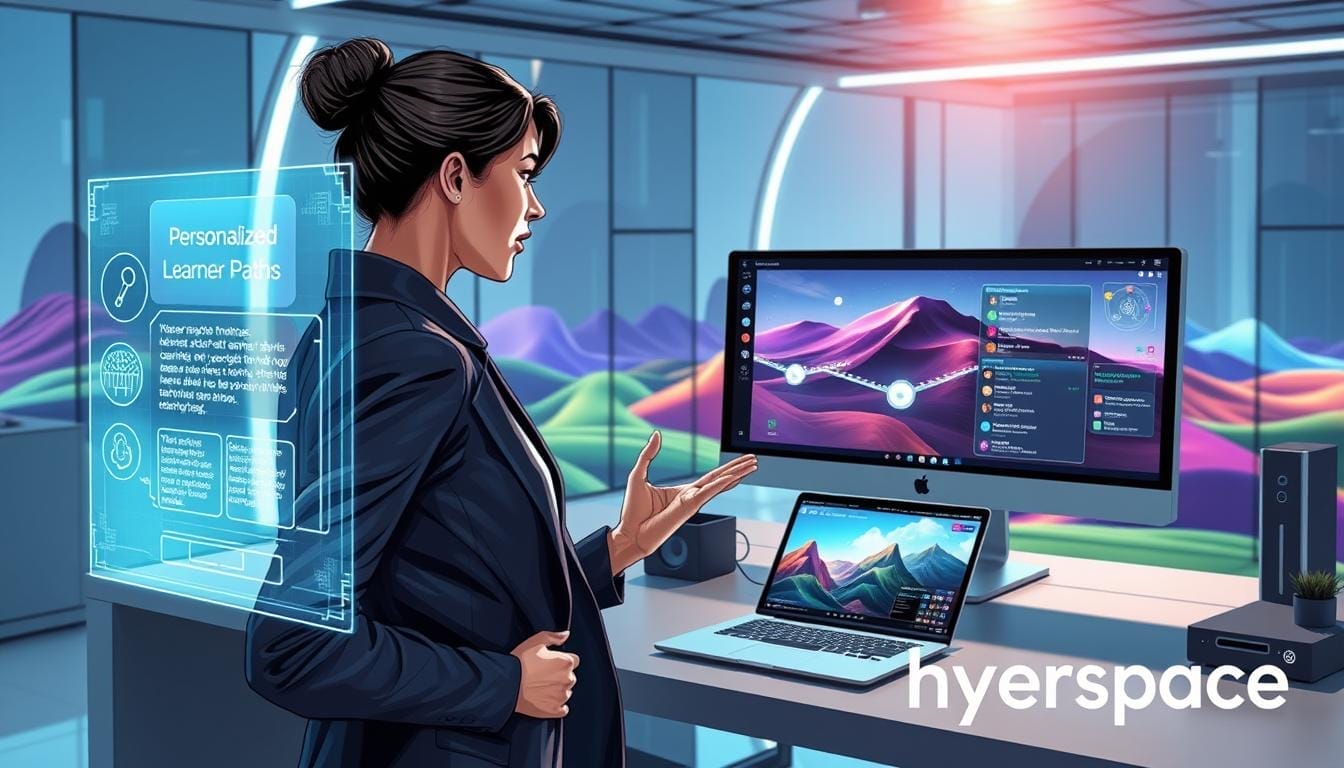
Did you know that immersive environments can boost employee retention rates by up to 75% compared to traditional classrooms? You are standing on the edge of a major shift where digital spaces redefine corporate growth. This metaverse platform empowers your organization to be more productive within a shared virtual world that mimics real-world collaboration.
Many companies still struggle with one-size-fits-all training that ignores individual needs and unique backgrounds. By utilizing 3D technology, you can create personalized learning that adapts to every user automatically. These tailored experiences ensure that every employee develops critical skills at their own natural pace without feeling left behind.
Modern learning requires tools that break geographical barriers and foster true inclusion across your workforce. When you prioritize adaptive educational journeys, you see a massive surge in overall employee engagement. This innovative learning style uses smart algorithms to help your team master complex tasks faster than ever before.
Forward-thinking leaders choose a metaverse approach to stay competitive across evolving global markets. High-quality learning builds lasting knowledge and improves professional experiences for remote teams. Ultimately, effective training is an inspiring journey that shapes success through consistent learning and focused training sessions.
Key Takeaways
- Immersive technology can increase knowledge retention by up to 75%.
- Custom educational journeys adapt to individual employee learning styles.
- Virtual environments effectively break down global geographical training barriers.
- Adaptive algorithms ensure skills are mastered at a natural personal pace.
- Organizations transition from generic programs to high-impact tailored training.
- Enhanced digital collaboration boosts overall workforce engagement and productivity.
Understanding the Enterprise Metaverse and Its Educational Potential
Unlocking your team’s full potential starts with understanding the immersive digital environments currently reshaping global businesses. This new frontier offers more than just a digital space; it provides a platform for true transformation and innovative learning strategies.
You can now move beyond the constraints of physical geography to foster a culture of constant growth. By embracing these digital tools, you empower your workforce to excel in an increasingly complex world.
What Is the Enterprise Metaverse?
The enterprise metaverse is a digital layer of reality designed specifically for the professional world. Unlike gaming worlds, this metaverse focuses on high-stakes applications like remote collaboration, product design, and 3D simulation.
It integrates seamlessly with your existing tools to create a cohesive work environment. By utilizing this technology, you bridge the gap between physical distance and team synergy. This technology empowers you to build realities that were previously impossible in a traditional office setting.

The Evolution of Corporate Learning in Virtual Environments
Corporate learning has moved far beyond simple slide decks and boring video calls. Today, immersive environments allow you to practice complex tasks in a risk-free digital space. This ensures your learning experiences are active rather than passive.
You can fail safely, iterate quickly, and master new skills with total confidence. The metaverse turns education into an adventure. This shift drives higher engagement and better knowledge retention for every single employee in your organization.
Key Differences Between Consumer and Enterprise Metaverse
It is vital to understand the differences between these two digital worlds to make informed decisions. While the consumer metaverse primarily targets entertainment and social interaction, the professional version prioritizes practical functionality and measurable outcomes.
The following table highlights why professional environments require a specialized approach:
| Feature | Consumer Focus | Enterprise Focus |
|---|---|---|
| Primary Goal | Entertainment and Socializing | Productivity and Training |
| Security | Standard Privacy | High-Level Compliance |
| Integration | Stand-alone Platforms | Connected Business Systems |
Enterprise solutions focus on enhanced security and privacy to protect your sensitive company data. These platforms also offer advanced tracking features. You can measure progress and demonstrate a clear ROI through detailed skill development analytics.
The Power of Personalized Learner Paths in Enterprise Metaverse
Stepping into the enterprise metaverse allows you to craft unique educational journeys that speak directly to each learner. Personalized blended learning is a powerful approach that combines online and offline learning experiences to provide you with a holistic and tailored environment. This method takes full advantage of virtual training activities to reinforce new skills and accommodate different professional preferences.

By blending immersive simulations with traditional methods, you create a space where knowledge is not just heard but experienced. You can design pathways that adapt to the specific needs of your workforce. This ensures that every moment spent in the digital workspace contributes directly to your organizational goals.
Defining Personalized Learning in Virtual Environments
In these immersive spaces, personalization means giving you the keys to your own professional growth. It goes beyond simply selecting a course from a static list. It involves creating a journey that matches your current skill level and future aspirations.
Personalized learning paths empower you to take ownership of your development journey. This sense of agency naturally increases your motivation and commitment to the task at hand. You are no longer a passive observer but an active creator of your own success within the metaverse.
When you feel in control of your learning, the quality of your work improves. You can explore complex scenarios at your own pace until you achieve true mastery. This flexibility builds deep confidence that translates directly to real-world performance.
How Adaptive Learning Technologies Drive Personalization
Modern technology allows the metaverse to react to your every decision in real-time. Adaptive systems track your progress and adjust the difficulty of tasks as you go. If you struggle with a specific concept, the environment offers extra support or alternative approaches to the problem.
This intelligent feedback loop ensures you always stay in the optimal “flow” state. You won’t feel bored by content you already know, nor will you feel overwhelmed by topics that are too advanced. Instead, the system focuses purely on your individual skill gaps to maximize efficiency.
Imagine a system that learns about you as you learn from it. This synergy creates a highly efficient training cycle that evolves with your career. It transforms traditional corporate education into a dynamic, living ecosystem.
Benefits of Learner-Centered Approaches in Virtual Training
Shifting to a learner-centered model offers massive benefits for your entire organization. You will experience much higher engagement and improved knowledge retention because the material is always relevant. These approaches also support diverse styles and needs, making your programs more inclusive for everyone.
- Increased Motivation: Empowered learners take pride in completing their unique paths.
- Faster Skill Development: Focus only on what you need to learn to save valuable time.
- Meaningful Feedback: Receive authentic assessments based on your performance in realistic simulations.
- Inclusive Environments: Accommodate different styles to ensure no one is left behind.
By eliminating unnecessary content, you reduce training time while actually improving the outcomes. Authentic assessments allow you to demonstrate your abilities in ways that traditional tests simply cannot match. This creates a workforce that is more agile, skilled, and ready for future challenges.
| Feature | Traditional Training | Metaverse Personalized Path |
|---|---|---|
| Engagement Level | Passive/Low | High/Interactive |
| Learning Speed | Fixed Schedule | Self-Paced/Adaptive |
| Assessment Type | Multiple Choice | Authentic Simulations |
| Core Benefits | Consistency | Skill Mastery & Retention |
Business Benefits of Implementing Personalized Learning in the Metaverse
You can unlock unprecedented corporate growth by integrating customized immersive training into your digital transformation strategy. Moving beyond static modules allows your company to solve complex talent gaps while driving innovation. This shift ensures every team member receives exactly what they need to succeed.
Improved Knowledge Retention and Skill Development
Traditional training often fails because it uses a one-size-fits-all approach. By contrast, a personalized learning path in the metaverse adapts to the pace of each individual. This tailored experience helps users grasp difficult concepts faster by practicing in realistic, risk-free simulations.

When you provide content that matches a user’s specific skill level, retention rates skyrocket. Active participation in virtual worlds replaces passive observation. This leads to mastery that translates directly to real-world performance.
Reduced Training Costs and Time to Proficiency
Speed is a vital currency in the modern market. Adopting the metaverse removes the need for physical travel and expensive equipment rentals. Your team can access high-quality instruction from anywhere in the world at any time.
| Metric | Traditional Training | Metaverse Learning |
|---|---|---|
| Travel Costs | High (Airfare/Hotel) | Zero (Virtual) |
| Onboarding Time | Weeks to Months | Days to Weeks |
| Facility Overhead | Required | Eliminated |
Personalization further accelerates this by cutting out redundant content. Users skip what they already know and dive straight into new challenges. This efficiency significantly reduces the total time to proficiency for your workforce.
Enhanced Employee Engagement and Satisfaction
High engagement is the natural result of an interactive and gamified environment. Research indicates that immersive learning can boost engagement by up to 30% compared to traditional methods. When you give people agency over their growth, they feel more connected to the company mission.
The enterprise metaverse can offer greater flexibility and work-life balance, potentially leading to increased employee satisfaction by up to 20%.
Building a sense of community is also easier in virtual spaces. Even in remote settings, metaverse interactions foster social bonds and collaborative problem-solving. Consider these additional benefits for your team:
- Gamification: Interactive elements make the experience more enjoyable and memorable for every user.
- Motivation: Personalized paths signal that the organization values individual career development.
- Loyalty: Investing in modern tools enhances long-term retention and staff pride.
- Connection: Social hubs in the metaverse break down silos and encourage peer-to-peer engagement.
Essential Components of Effective Personalized Learner Paths
Success in the enterprise metaverse hinges on integrating several vital components that turn a simple simulation into a powerful engine for growth. You need a framework that respects individual talent while pushing for organizational excellence. By focusing on these core elements, you create transformative learning paths that empower every professional.
Learner Assessment and Skills Gap Analysis
Before you begin the journey, you must know where you stand. Advanced tools analyze your current abilities to find exactly what you need to master. This process creates a clear map for your future development within the virtual workspace. It ensures you don’t waste time on skills you already have, making the learning experience much more efficient and targeted.
Customized Content Delivery Based on Individual Needs
The metaverse allows for dynamic environments that change based on your specific requirements. This isn’t just about reading text; it involves engaging with content that matches your role and goals. Using sophisticated adaptive learning technologies, the system serves up challenges that fit your speed. This level of personalization keeps you motivated and ensures the data you receive is always relevant to your daily tasks.

Progress Tracking and Adaptive Feedback Mechanisms
Real growth happens when you get the right information at the right time. Sophisticated tracking goes beyond simple completion scores to measure how well you apply new skills. These multi-dimensional tools look at your confidence and behavioral changes during live simulations.
- AI-powered feedback systems identify performance patterns that humans might miss.
- Real-time mechanisms provide guidance as you make decisions in the metaverse.
- Effective systems combine automated responses with human coaching for better support.
| Feature | Measurement Type | Primary Benefit |
|---|---|---|
| Skill Analytics | Behavioral Data | Precision Training |
| Real-time Prompts | Contextual Feedback | Instant Correction |
| Growth Maps | Competency Progress | Long-term Success |
Providing feedback and ratings for specific courses is another critical aspect of evaluating learner progress. Personalized insights highlight areas of improvement and celebrate achievements, reinforcing your motivation and commitment to the learning journey. Analyzing this data helps leaders refine the learning environment to ensure every user reaches their peak performance.
How to Design Personalized Learner Paths for the Enterprise Metaverse
Crafting personalized learner paths within the enterprise metaverse requires a strategic shift in how you view digital education. You are not merely recording a series of lectures; you are building an immersive experience where professional growth feels natural and engaging. This design process empowers you to transform static information into a living environment that adapts to every user.
Step 1: Identify Learning Objectives and Desired Outcomes
You begin your journey by defining the “why” behind your training program. Success starts when you align educational goals with the core objectives of your business. Identify the specific skills your team needs to master to drive innovation forward in your industry.
By visualizing the final destination, you can map out a route that ensures every minute spent in the virtual world adds value. Clear outcomes act as a compass for both the designer and the user. You want to ensure that every participant knows exactly what they will gain from this immersive environment. Focusing on measurable outcomes allows you to prove the value of your metaverse investment to stakeholders.
Step 2: Create Modular Content for Flexible Learning Journeys
Agility is the cornerstone of modern corporate training. You can achieve this by breaking down complex subjects into small, manageable modules. This modular approach allows you to build flexible learning paths that cater to different skill levels and specific job roles.
When you create bite-sized content, you empower users to consume information at their own pace. This flexibility ensures that the training remains relevant to their daily tasks and schedules. You can easily update or swap modules as your industry evolves, keeping your virtual curriculum fresh and effective for years to come.
| Feature | Traditional Linear Learning | Metaverse Modular Learning |
|---|---|---|
| Structure | Fixed, chronological sequence | Flexible, non-linear blocks |
| Pacing | Instructor-led or rigid speed | User-controlled and adaptive |
| Relevance | General overview for all | Highly specific to user needs |
Step 3: Implement Branching Scenarios and Decision Points
To truly transform your training, you must implement interactive elements that mirror your daily workplace challenges. Branching scenarios ensure that every critical decision a learner makes leads to a unique outcome and a rich experience. This approach recognizes that every learner is unique, with individual needs and preferences.
- These interactive elements create truly adaptive environments that respond instantly to learner choices and real-time performance.
- Active participation transforms passive content consumption into dynamic sessions that develop critical thinking and high-level problem-solving skills.
- The enterprise metaverse enables you to build complex, realistic situations with meaningful consequences that would be impossible in traditional training.
- You can explore valuable data collected from these choices to gain deep insights into learner thought processes and potential knowledge gaps.
- Effective designs balance guided learning with autonomy, ensuring you meet critical objectives while allowing for a feeling of true independence.
By allowing learners to exercise choice and control over their learning journey, you ensure the content stays meaningful. This level of autonomy fosters a deeper connection to the material and your organization’s goals. When training feels like an exploration rather than a chore, you unlock the full potential of your workforce.
Leveraging Immersive Technologies for Enhanced Personalization

Step into a new era where immersive technologies redefine the depth of your personal growth. These tools transform passive observation into active participation. You are no longer just watching a screen; you are experiencing your career evolution in real-time.
Innovative virtual tools allow you to customize every aspect of your professional development. By engaging with high-fidelity environments, you build confidence faster than ever before. This is where your potential meets the limitless possibilities of the metaverse.
Virtual Reality Simulations for Skill Practice
Imagine mastering complex tasks without the fear of making costly mistakes. Through virtual simulations and hands-on experiences, you can practice real-world tasks effortlessly. This immersive training allows you to acquire practical skills in a safe and controlled environment.
You can repeat difficult maneuvers until they become second nature. This repetition builds muscle memory and sharpens your decision-making. It is the ultimate way to bridge the gap between theory and action in your daily work.
Interactive 3D Environments for Contextual Learning
Context is everything when it comes to deep understanding. Interactive 3D spaces allow you to explore a digital world that mirrors your actual workspace. You can interact with objects and colleagues just as you would in a physical office.
This sense of “presence” makes your learning feel urgent and relevant. It turns abstract concepts into tangible experiences that stay with you much longer. You are empowered to learn by doing in a space built specifically for your unique needs.
Digital Twins and Real-World Application Scenarios
The rise of digital twins brings a new level of precision to your development. These virtual replicas of physical systems create realistic, contextual learning experiences. Training in these environments ensures that your skills transfer directly to real-world application scenarios.
- Digital twins allow you to practice with complex equipment without risk to yourself or resources.
- Personalized paths use these replicas to create tailored challenges based on your specific job role.
- These high-fidelity simulations provide the perfect sandbox for technical innovation and testing.
- You can simulate process improvements in a virtual space before implementing them physically.
- This combination of technology and personalization drives operational excellence across your entire team.
Data-Driven Approaches to Personalizing Learning Experiences
Harnessing the flow of real-time data allows you to craft a learning experience that truly evolves with every user. In the enterprise metaverse, every interaction becomes a signal. You can transform these signals into a personalized approach that accelerates professional growth.
Collecting and Analyzing Learner Performance Data
Modern virtual environments capture more than just quiz scores. You can monitor how a person moves through a 3D space or interacts with a digital twin. This data-driven approach ensures that no detail of the journey goes unnoticed.
Personalized blended training leverages external resources to expand the depth of your curriculum. Learners can access a wide range of materials, including videos, articles, and case studies. These tools complement the core training and provide the necessary context for complex tasks.
Using AI and Machine Learning to Adapt Content
Artificial Intelligence acts as the engine behind individual learning paths. It analyzes performance in real-time to adjust the difficulty of a simulation. If a user struggles with a concept, the system provides immediate remedial content.
This creates a dynamic environment where the world literally changes to meet the needs of the worker. You are no longer stuck with a one-size-fits-all module. Instead, you provide a responsive journey that respects the unique pace of every employee.
“The future of education is not about the technology itself, but about how data empowers us to see the learner more clearly than ever before.”
Balancing Automation with Human Guidance
Effective training requires you to strike a perfect balance between technology and empathy. While automation handles routine scheduling and basic skill drills, it cannot replace human connection. Instructors provide the emotional support and motivation that AI lacks.
A human facilitator helps you make sense of your learning journey by connecting it to your career goals. This guidance ensures that virtual skills translate into real-world success. Professionals now evolve from simple content delivery to roles focused on coaching, curation, and community building.
| Feature | Role of AI & Automation | Role of Human Facilitators |
|---|---|---|
| Feedback | Instant data-driven corrections. | Nuanced, emotional, and social feedback. |
| Content | Adaptive delivery of modules. | Curating high-level context and stories. |
| Support | 24/7 technical assistance. | Career coaching and mentorship. |
| Focus | Efficiency and skill repetition. | Critical thinking and soft skills. |
Breaking Down Geographical and Accessibility Barriers
The enterprise metaverse transforms how you reach every employee, ensuring that distance and physical ability never limit potential again. By leveraging virtual spaces, you build a bridge between global talent and essential knowledge. This innovation allows you to foster a truly unified workforce.
Enabling Global Collaboration Through Virtual Learning
You can now unite teams from across the globe in a single, immersive environment. These virtual spaces provide seamless learning experiences that overcome physical boundaries. High-quality interaction happens in real-time, regardless of a person’s actual location.
You can use ai-powered learning paths to deliver instant translation and culturally adaptive content. This ensures that language is no longer a hurdle for professional growth or team synergy. Every member of your team gains equal access to the same high-level resources.
Creating Inclusive Learning Experiences for Diverse Learners
Every person learns differently, and your digital strategy must reflect that reality. Adaptive technologies in the metaverse automatically adjust content and interaction methods to meet specific accessibility needs. This creates a fair environment where everyone can thrive and contribute.
Inclusive design ensures that these experiences work better for everyone, regardless of their background or physical abilities. Learners can choose their own preferences for how they engage with content. This flexibility allows diverse individuals to feel empowered and supported in their journey.
You can provide multiple ways to demonstrate knowledge, which accommodates various learning style preferences. By focusing on individual needs, you ensure that learning remains a powerful and universal tool. Continuous learning becomes an achievable goal for every employee in your organization.
| Category | Technology Feature | Accessibility Benefit |
|---|---|---|
| Language | Real-time Translation | Removes barriers for global teams |
| Sensory | Adaptive Audio/Visuals | Supports learners with different abilities |
| Engagement | Modular Content | Matches individual learning speeds |
Fostering Social Learning Communities in the Enterprise Metaverse
Imagine a world where your workspace is also a vibrant hub for collective intelligence. Social learning within these virtual communities creates an environment where knowledge exchange and collaboration thrive.
Through these communities, you can establish personal and professional connections. You expand your networks and access diverse perspectives that are often hidden in traditional offices. This transformation turns everyday work into a continuous journey of growth.
Building Virtual Communities of Practice
The enterprise metaverse creates powerful opportunities for peer-to-peer learning through shared experiences. You can engage in collaborative problem-solving that feels immediate and impactful.
“True innovation occurs when we bridge the gap between individual study and collective wisdom in a shared digital space.”
These virtual environments enable you to capture and share tacit knowledge. This represents the hard-to-document expertise that traditionally only transfers through direct apprenticeship. Now, that expertise is available to everyone, regardless of their physical location.
| Feature | Community Reach | Primary Benefit |
|---|---|---|
| Skill-Sharing | Global Teams | Diverse Perspectives |
| Group Projects | Cross-Functional | Higher Collaboration |
| Peer Review | Department-Wide | Quality Improvement |
Facilitating Peer-to-Peer Learning and Mentorship
Virtual mentorship programs connect you with experts across the globe. This creates personalized guidance that complements your formal learning paths. You no longer have to wait for a scheduled meeting to gain valuable insights.
Facilitating these interactions requires a balance of structure and organic interaction. You can use social features like skill-sharing and interactive peer reviews to enhance your individual journey. These tools ensure your progress stays aligned with your specific career goals.
Effective learning in the metaverse leverages collective intelligence to support you. By combining facilitated sessions with natural networking, you create a robust ecosystem. This approach ensures you stay ahead in an ever-changing business landscape.
Implementing Personalized Learning Paths: A Step-by-Step Guide
You can turn the vision of virtual education into reality by following a proven deployment strategy. The implementation of an immersive workspace is a transformative process that requires careful planning and foresight.
Step 1: Select the Right Metaverse Platform for Your Needs
Choosing the right foundation is your first move toward success. You need a platform that offers no-code flexibility and high scalability for your growing organization. Look for tools that allow you to build custom environments without needing a specialized team of developers.
Your platform should offer deep immersion to keep your users focused and engaged. Consider how the virtual space reflects your brand and unique corporate culture. High-quality visuals and intuitive controls make a massive difference in how people interact with your content.
Step 2: Integrate with Existing Learning Management Systems
A seamless transition between your current tools and the metaverse is vital for long-term success. You must connect your virtual environment to your existing LMS to track progress effectively. This ensures that every learning journey is documented and analyzed correctly.
A well-integrated process allows for automatic updates of employee records and skill achievements. You can see exactly where a student excels or struggles in real-time. Access to high-quality learning data creates a better feedback loop for both the company and the user.
Step 3: Train Facilitators and Support Personnel
Technology alone is not enough to change a corporate culture or improve skills. Even the most advanced learning technology requires skilled human facilitators to ensure a successful outcome. You must provide extensive training to your staff to ensure they are comfortable in the new environment.
Skilled personnel bridge the gap between complex software and the individual student. Robust technical support helps resolve issues before they disrupt an active educational session. Using a “train-the-trainer” approach can build internal capability while creating champions who drive adoption.
| New Competency | Description | Business Goal |
|---|---|---|
| Experience Design | Crafting virtual journeys | High Engagement |
| Data Analysis | Interpreting user metrics | Personalization |
| Virtual Facilitation | Leading live 3D sessions | Collaboration |
Ongoing professional training ensures your team stays ahead of new features and tools. Facilitators must develop competencies in AI collaboration and digital experience design. This specialized training empowers your leaders to deliver impactful results in every session.
Finally, encourage a culture of innovation and exploration among your workforce. When people feel confident using the metaverse, they are more likely to embrace the learning experience fully. Comprehensive training programs make the transition to the future of work both smooth and rewarding.
Measuring Success: KPIs for Personalized Learning in the Metaverse
Shifting to a 3D environment offers unprecedented data points that help you quantify the success of every individual’s journey. You can now see exactly how learners interact with their surroundings and where they excel in real time. Studies suggest that new ways of working enabled by the metaverse can significantly enhance collaboration and training, potentially leading to improved productivity and outcomes by 30% (PwC).
To capture this growth, you must look beyond traditional spreadsheets. You need a measurement strategy that aligns immersive experiences with your high-level organizational goals. This ensures your investment creates a lasting transformation in workforce capability.
Tracking Engagement and Completion Rates
Engagement in the metaverse is more than just clicking a button to reach the next slide. You can track how long users stay in specific zones and their active participation in group simulations. High completion rates usually signal that the content is relevant and the immersive nature of the path is working.
Monitoring these metrics helps you identify where learners might get stuck or lose interest. You can then adjust the difficulty or content flow to keep the experience challenging yet attainable. Active time spent in-world often correlates directly with better knowledge retention.
Assessing Skill Acquisition and Knowledge Transfer
Virtual reality allows you to observe actual skill application without any real-world risks. You can measure how quickly a learner masters a complex task compared to old training methods. This provides clear proof that the person can perform the job, not just pass a written test.
By comparing performance in a simulation to previous benchmarks, you see the true value of personalized paths. Continuous measurement creates a feedback loop that lets you optimize your content constantly. This data demonstrates a clear causal relationship between targeted learning and high-quality results.
Evaluating Business Impact and ROI
Calculating the ROI of your program requires connecting digital data to tangible business outcomes. Focus on metrics like error reduction, improved customer satisfaction, and faster time-to-proficiency for new hires. You can use comparison studies between traditional training and immersive paths to prove these benefits.
| Outcome Metric | Traditional Training | Metaverse Learning |
|---|---|---|
| Productivity Increase | Baseline | Up to 30% Increase |
| User Engagement | Low to Moderate | High (Active Participation) |
| Knowledge Retention | Rapid Decline | Strong (Experiential) |
“Measurement is the first step that leads to control and eventually to improvement.”
By tracking these data points, you build a compelling case for the continued impact of virtual education. Use these insights to refine your strategy and empower your team to reach new heights of innovation.
Overcoming Challenges in Implementing Personalized Learner Paths
As you begin your journey into immersive training, identifying and solving potential roadblocks is crucial for long-term growth. The market for these technologies is booming as companies look for better ways to train. P&S Intelligence reports that the global enterprise metaverse market should reach $678.8 billion by 2030.
This massive growth, at a CAGR of 42.8%, highlights the huge potential for digital transformation. To stay ahead, your implementation strategy must address hurdles early. By being proactive, you turn obstacles into opportunities for your team to shine.
Addressing Privacy and Data Security Concerns
Protecting employee data is the foundation of a successful virtual world. You need to create a safe space where learners feel comfortable exploring new ideas. Use strong encryption and clear policies to keep personal information secure at all times.
A transparent approach to data management builds trust within your organization. Trust is the key to getting everyone on board with new technology. When people feel safe, they engage more deeply with their learning paths.
Managing Technology Adoption and Change Resistance
Change can be intimidating for even the most talented teams. You can ease this transition by showing exactly how the metaverse makes daily tasks easier. Focus on the benefits of immersive practice rather than just the technical features.
Start with small pilot groups to build excitement and gather feedback. When your team sees their peers succeed, they will want to join the digital revolution. Lead with enthusiasm and provide the support they need to feel confident.
Ensuring Scalability and Sustainability
Ensuring your program can grow with your business is a vital step. You should plan for scalability from the very first day instead of treating it as an afterthought. This mindset allows you to reach more people without increasing complexity.
Use modular content and template-based designs to scale your training efficiently. Cloud-based systems help you manage a growing user base with ease. A smart approach balances the creation of new lessons with the upkeep of current resources.
Finally, focus on building internal skills to ensure long-term sustainability. Train your own facilitators to lead the way and share their knowledge. This empowers your organization to keep innovating for years to come.
- Design modular modules for easy updates and reuse.
- Use cloud infrastructure to support thousands of users simultaneously.
- Empower internal champions to lead the training journey.
Case Studies: Successful Implementation of Personalized Learning in Enterprise Metaverse
Transforming your training strategy becomes easier when you analyze the blueprints of pioneers in the enterprise metaverse. These case studies illustrate how industry giants move beyond theory into impactful, immersive results. By observing these leaders, you can envision how to scale your own virtual initiatives effectively.
Accenture’s Approach to Virtual Collaboration and Learning
Accenture created the “Nth Floor” to revolutionize how global teams connect and grow together. You can see how they use a virtual campus to host orientations for hundreds of thousands of new hires. This environment allows employees to build social capital and professional networks instantly without traveling.
By prioritizing a seamless learning journey, they ensure every individual feels prepared for their specific role. Their success proves that digital spaces can effectively replace traditional, static onboarding methods. It creates a sense of belonging that transcends physical office boundaries.
Boeing’s Use of Immersive Training for Complex Procedures
Boeing utilizes high-fidelity simulations to train technicians on world-class aircraft assembly and maintenance. This immersive training allows workers to practice complex procedures in a risk-free environment before touching physical hardware. You will find that these trainees gain confidence much faster than those using manual blueprints.
The precision required in aerospace demands a highly specialized learning experience. This approach minimizes human error and ensures that safety remains the top priority during every build. They effectively leverage digital twins to bridge the gap between theory and the physical world.
Penske’s Virtual Learning Design Summit
Penske, a leader in transportation, successfully hosted a Virtual Learning Design Summit to connect their vast regional workforce. They invited employees from various locations to engage in an interactive learning journey tailored to their specific roles and interests. Participants explored interactive booths and shared digital materials while interacting through custom avatars.
The summit combined collective sessions with personalized exploration tracks that allowed participants to focus on their unique responsibilities. This shift fostered incredible teamwork and networking across diverse geographical locations. Through thoughtful facilitation, Penske solved the challenge of maintaining meaningful connection in a remote-first environment.
Key Outcomes of Penske’s Summit:
- Increased Participation: Higher attendance rates compared to previous in-person events.
- Enhanced Engagement: Employees actively collaborated in real-time through VR simulations.
- Diverse Representation: Inclusion of voices from all regions and organizational levels.
- Improved Results: Better learning outcomes through accessible, shared digital resources.
Penske’s implementation has evolved based on participant feedback and detailed data analysis. This ensures that every subsequent session offers a more effective and personalized experience for the workforce. Their journey highlights the power of using a virtual space to democratize professional development.
| Company | Primary Objective | Key Technology |
|---|---|---|
| Accenture | Global Onboarding | Virtual Campus (Nth Floor) |
| Boeing | Technical Proficiency | Digital Twins & Simulations |
| Penske | Regional Collaboration | Learning Design Summit |
Hyperspace: The Ideal Solution for Personalized Learning in the Enterprise Metaverse
Unlock the full potential of your team with the leading enterprise metaverse platform. Hyperspace provides a seamless bridge between corporate vision and immersive reality. It empowers you to create environments where every employee thrives through meaningful interaction.
Key Features and Capabilities of Hyperspace
This platform offers no-code tools that allow you to build worlds without technical hurdles. It provides the information required to design high-fidelity simulations easily. You can deploy modular assets that scale with your growing needs across the globe.
The system supports deep integration with your current tools. You can customize every aspect of the environment to match your brand identity. This flexibility ensures your virtual campus feels authentic and professional.
How Hyperspace Enables Truly Personalized Learning Experiences
Your team gains the potential to learn through adaptive paths that react to their specific choices. Innovation becomes personal when AI adapts content in real-time to match skill levels. This ensures that every user receives the most relevant information at the right time.
Dynamic feedback loops provide instant guidance during simulations. Learners can explore complex scenarios safely while the platform tracks their progress. This data-driven approach turns every session into a tailored growth opportunity.
Getting Started with Hyperspace for Your Organization
Getting started with your organization is a clear, structured journey. Our implementation strategy focuses on quick value and long-term success. We help you move from initial concept to a fully functional learning ecosystem.
- Our team outlines a straightforward process for implementation, taking you from the initial consultation to the full deployment of your personalized learning paths.
- The onboarding program ensures quick time-to-value by providing ready-to-use templates, best practices, and expert guidance for creating effective experiences.
- We offer flexible pricing models that scale with your needs, making enterprise-grade personalized learning accessible for businesses of all sizes.
- A dedicated customer success team supports you throughout the entire journey, ensuring you achieve the best possible results from your investment.
- Experience the future of training today by visiting http://hyperspace.mv/get-starter to start your free trial and see the power of the metaverse firsthand.
Conclusion
Transforming your workforce starts with unlocking the true potential of every individual through immersive digital environments. The metaverse is no longer a distant dream but a practical tool for modern businesses today. By adopting personalized learning paths, you can give your team the specific tools they need to succeed in a fast-paced market.
These virtual spaces offer a unique experience that traditional classrooms simply cannot match. You will see a dramatic boost in knowledge retention and faster skill development across all levels of your organization. These digital solutions help you cut training costs while keeping your employees excited and engaged in their daily learning journey.
The future of corporate development lies in the perfect blend of immersive technology and adaptive feedback. You must balance high-tech tools with human guidance to create a truly effective and memorable experience. This thoughtful approach ensures that every learning moment is relevant and impactful for your global teams.
As you explore the metaverse, you need a partner that makes the transition seamless and powerful. Digital learning in the metaverse should be accessible to everyone, regardless of their technical background. This is where innovation meets execution to drive real, measurable results for your growing business.
Hyperspace stands as the ideal solution for organizations ready to transform their educational approach today. We empower you to build a better learning environment within the metaverse without any complex coding requirements. Take the final step toward excellence and start a free trial at http://hyperspace.mv/get-starter to witness the next evolution of work.
| Strategic Pillar | Key Business Outcome |
|---|---|
| Skill Development | Accelerated proficiency through hands-on virtual practice. |
| Cost Efficiency | Reduced travel expenses and physical infrastructure needs. |
| Employee Satisfaction | Higher engagement through interactive and social environments. |